It Is Not About the Free Coffee. It Is About What Earning It Feels Like.
The psychology of rewards explains something every business owner has noticed but rarely stops to examine: customers who are working toward a reward behave differently from customers who are not. They come back sooner. They spend a little more. They talk about the business with a kind of quiet enthusiasm that no ad campaign can buy.
This is not a coincidence. It is the result of deeply wired human behavior that has been studied for decades, and understanding it changes how you think about loyalty programs entirely.
The Brain on Progress
When a person makes progress toward a goal, the brain releases dopamine. Not when the goal is achieved, but during the pursuit of it. The anticipation of a reward is neurologically more stimulating than the reward itself.
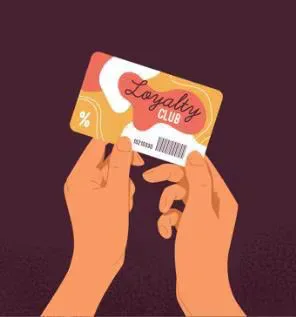
This is why a loyalty stamp card works even when the free item at the end is modest. A customer collecting stamps toward a free pastry is not primarily motivated by the pastry. They are motivated by the feeling of moving forward, of being one step closer, of having something in progress that is worth completing.
The psychology of rewards is rooted in this loop: action, progress, anticipation, action. Each stamp reinforces the behavior that earned it, which makes the next visit more likely, which earns another stamp, which deepens the loop.
The Endowed Progress Effect
In 2006, researchers ran a study with car wash loyalty cards. One group received a card requiring eight stamps for a free wash, starting from zero. Another group received a card requiring ten stamps, but with two already filled in. The total stamps required to earn the reward were identical. But the group with the head start completed their cards significantly faster.
This is the endowed progress effect: people are more motivated to finish something they feel they have already started. A loyalty program that gives new members a small boost at the moment they join, one or two stamps on a fresh card, is not just a nice gesture. It is a proven behavioral lever.
The psychology of rewards tells us that the first step is the hardest. Make it feel like the customer is already on their way, and the rest of the journey becomes much easier to complete.
Identity and Belonging
Beyond the mechanics of progress, there is something more personal happening inside a loyalty program. When a customer becomes a regular, they begin to identify as one. They are not just someone who visits occasionally. They are a regular at this cafe, a loyal client at this barbershop, a member of this community.
That identity is powerful. People act in ways that are consistent with how they see themselves. A person who thinks of themselves as a regular will choose your business over a competitor not just out of habit, but because going elsewhere would feel slightly inconsistent with who they are.
Loyalty programs accelerate this identity formation. They give the customer a visible, tangible marker of their relationship with your business. A card with stamps on it is proof that they have been here before, that they are known here, that they belong.
The Power of Recognition
One of the most underestimated elements of reward psychology is recognition. Humans have a deep need to feel noticed. It is tied to our most basic social instincts, the same ones that made belonging to a group essential for survival for most of human history.
When a loyalty program acknowledges a milestone, a tenth visit, a birthday, a referral that brought in a friend, it is doing something far more significant than issuing a discount. It is saying: we noticed. You matter here. That message, however it is delivered, produces a feeling that is disproportionately powerful relative to the cost of producing it.
The psychology of rewards is as much about emotional currency as it is about free items. Customers who feel genuinely recognized by a business develop a loyalty that is remarkably resistant to competition.
Variable Rewards and Surprise
There is another layer to reward psychology that the best programs use well: variability. When rewards are entirely predictable, they become routine, and routine loses its motivating power over time. But when there is an element of surprise, an unexpected bonus stamp, a spontaneous treat for a loyal customer, an early unlock on a milestone, the dopamine response is amplified.
This is the same mechanism behind social media notifications and scratch cards. Unpredictability keeps the reward system engaged. A loyalty program that occasionally delivers a small, unexpected gesture alongside its regular structure builds a deeper emotional connection than one that is purely transactional.
What This Means for Your Business
Understanding the psychology of rewards does not require a degree in behavioral science. It requires building a loyalty program that puts these principles to work naturally.
Give new members a sense of early progress so they feel invested from the first visit. Acknowledge milestones so customers feel seen and valued. Send a birthday reward so the relationship feels personal. Allow for moments of surprise that make a regular visit feel special.
The mechanics of a good loyalty platform handle most of this automatically. Push notifications mark progress. Birthday automation sends personal rewards without you having to remember a single date. Geo-triggered nudges reach customers at exactly the right moment. Psychology is built into the structure, and the structure runs itself.
Loyalty Is a Feeling First
The free coffee at the end of a stamp card is almost beside the point. What keeps a customer coming back is the feeling they get while working toward it. The sense of progress, the identity of being a regular, the small moments of recognition that tell them their presence is valued.
The psychology of rewards explains why the businesses with the best loyalty programs are not always the ones with the biggest rewards. They are the ones that make the journey feel good. That is what turns a first-time visitor into a regular, and a regular into someone who tells their friends.
Build a loyalty program that understands people, and the numbers take care of themselves.
Kult Cards is designed around the psychology of what makes loyalty actually work. Start your free 14-day trial at kult.cards.
Enjoyed the read?
More guides, product updates and stories from Kult Cards.