The Most Important Decision in Your Loyalty Program Setup
Before you design the card, before you set the reward, before you print the QR code, the most important decision in setting up a loyalty program is choosing the right mechanic. Stamp card or points program. Visit-based or spend-based. Simple and familiar, or flexible and proportionate.
Stamp card vs points program is the question every local business owner faces when they start thinking seriously about customer loyalty. Both work. Both drive repeat visits. But they work in different ways, suit different businesses, and produce different results depending on how your customers actually behave. Choosing the wrong one does not doom a program, but choosing the right one from the start makes everything easier.
What a Stamp Card Does
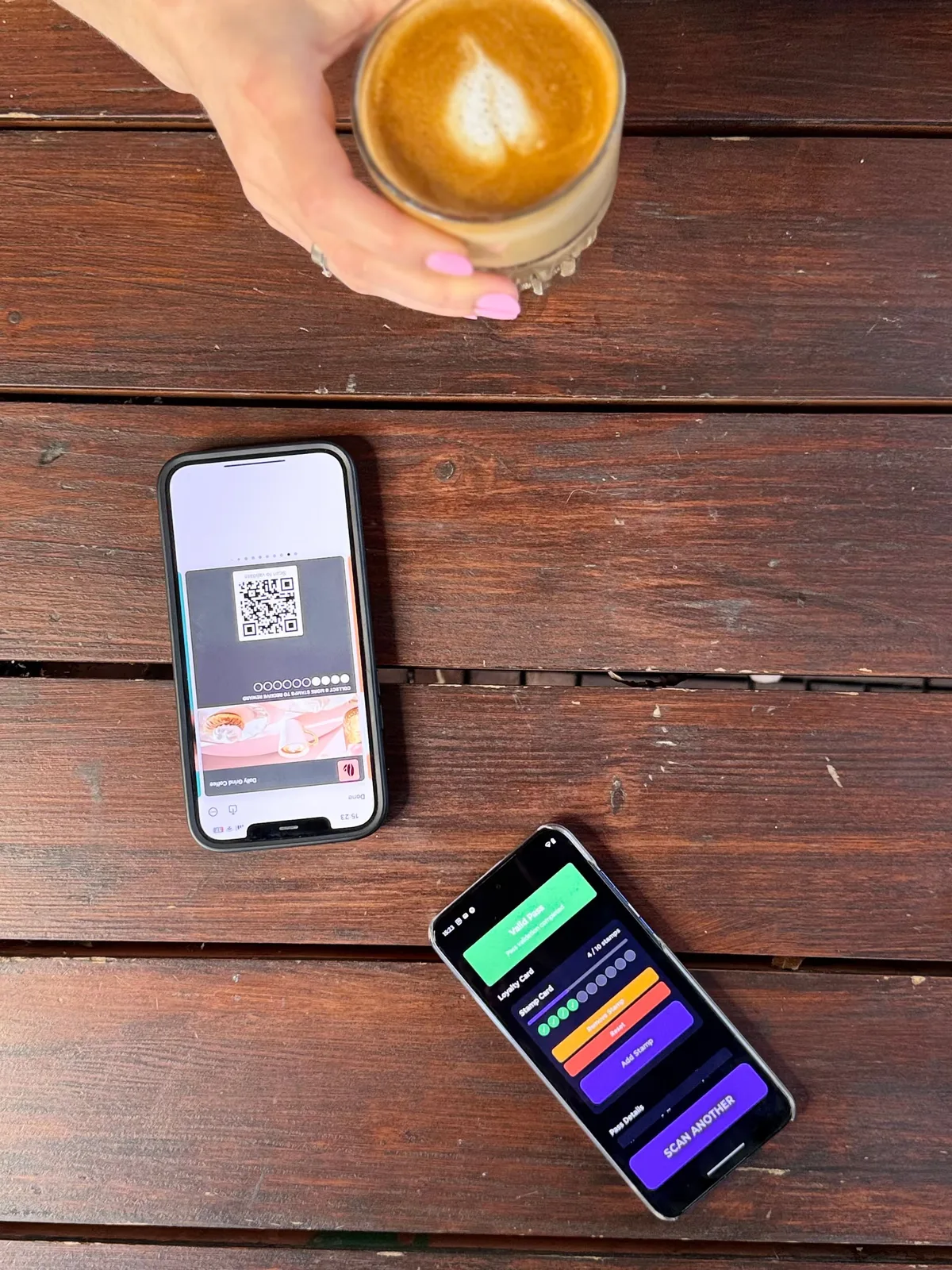
A stamp card rewards visits. Every time a qualifying customer action happens, a purchase, a specific product bought, a minimum spend reached and they earn a stamp. When the card is full, the reward is unlocked.
The mechanic is universally understood. Customers have seen stamp cards their entire lives. They know immediately what is being offered, how to earn, and what they are working toward. There is no learning curve, no explanation needed, and no moment of confusion at the counter.
A stamp card is also immediately motivating in a way that is hard to replicate. A card with two stamps already on it and eight remaining feels like a concrete journey with a visible destination. The progress is tangible. The goal is clear. And the psychological pull of a nearly-complete card is one of the most reliable drivers of repeat visits in loyalty program design.
What a Points Program Does
A points program rewards value. Every purchase earns a number of points based on how much the customer spent. When enough points accumulate, the customer unlocks a reward.
The key difference from a stamp card is proportionality. A customer who spends twenty euros earns twice as many points as one who spends ten. A customer who visits frequently and spends consistently builds a significantly larger balance than one who visits occasionally. The reward reflects the actual depth of the customer's engagement with the business, not just the number of times they walked through the door.
A points program is also more flexible in terms of what customers can earn toward. A single points balance can unlock rewards at different thresholds, a small reward at 100 points, a larger one at 500 which keeps the program engaging over a longer relationship without requiring the customer to reset from zero every time they earn a reward.
In Kult Cards, the points program also includes a public leaderboard, turning loyalty into a friendly competition where customers race toward a single prize, the most points by an end date, or the first to reach a target. This adds an entirely different dimension of engagement that a stamp card cannot replicate.
When a Stamp Card Is the Right Choice
A stamp card is almost always the right choice when the following conditions apply.
Your customers visit frequently and regularly. A stamp card works best when customers come in often enough to complete a card in a reasonable timeframe. A coffee shop where customers visit daily, a barbershop where clients come every three to four weeks, a car wash where customers return monthly, all of these suit a stamp card because the goal feels achievable and the progress builds quickly.
Your transactions are relatively consistent in value. If most customers spend a similar amount per visit, rewarding by visit count rather than spend is fair and uncomplicated. A cafe where almost everyone orders a coffee and maybe a pastry does not need the complexity of a points system, the stamp card reflects the relationship accurately.
You want simplicity above all. If you are setting up a loyalty program for the first time, your staff are not especially tech-comfortable, or your customer base skews older or less familiar with digital programs, a stamp card is the right choice. It is understood immediately, explained in one sentence, and requires zero onboarding for anyone.
You want to reward a specific behavior. Kult Cards allows stamp rules to be set to reward only a specific product — "only our signature latte earns a stamp" or only purchases above a minimum spend. This makes stamp cards useful for steering customers toward particular products or basket sizes without the complexity of a full points system.
When a Points Program Is the Right Choice
A points program is the right choice when the following conditions apply.
Your transaction values vary significantly. If some customers spend ten euros and others spend a hundred in the same visit, a stamp card that treats them identically feels unfair to both. The high-spending customer deserves more recognition. The points program delivers it automatically.
You want to reward your best customers proportionally. A points program naturally surfaces your highest-value customers, the ones with the largest balances, the most frequent visits, the highest spend per transaction. It gives you a clear picture of who your most loyal customers actually are, and gives them a reward structure that reflects their investment in your business.
You want to create competition and energy. The Kult Cards points program includes a public leaderboard where customers can see where they rank against others. For businesses with a community feel such as a gym, a bar, a restaurant with regulars who know each other, a leaderboard competition with a meaningful prize at the end creates genuine buzz and drives visit frequency in ways a stamp card cannot.
You run campaigns rather than ongoing programs. The points program in Kult Cards is designed for campaign-based loyalty: a seasonal competition, a spend-to-win promotion, a month-long challenge. If you want to run a burst of loyalty activity around a specific event or period, a points program with a defined end date and a single prize is the right mechanic.
The Quick Decision Guide
Still not sure? Here is the simplest way to choose.
If your customers visit at least once a week and spend a similar amount each time - stamp card.
If your customers visit less frequently but spend significantly different amounts each visit - points program.
If you want something customers understand immediately without any explanation - stamp card.
If you want to reward your highest spenders more than your average visitors - points program.
If you are setting up your first loyalty program and want to get it live today - stamp card.
If you want to run a time-limited campaign with a compelling prize and a leaderboard - points program.
You Can Run Both
One of the advantages of Kult Cards is that the plan you choose determines how many programs you can run simultaneously, not which ones you are allowed to use. A Growth plan at 40 euros a month supports up to three active programs at once.
This means you can run a stamp card as your everyday loyalty mechanic and launch a points competition in December for the holiday season. Or run a stamp card for regular customers and a points program for a VIP tier. The two mechanics are not mutually exclusive, they are complementary tools for different goals within the same business.
The Right Answer Is the One That Fits Your Customers
Stamp card vs points program is ultimately a question about how your customers behave and what they respond to. The best loyalty mechanic is not the most sophisticated one, it is the one that feels natural for the customers you already have, that rewards them in a way that feels fair and motivating, and that gives them a clear, compelling reason to come back.
Start with the mechanic that fits today. Add the other when the time is right.
Set up your stamp card or points program in fifteen minutes at kult.cards. Free 14-day trial, no setup fees, no app required for your customers.
Enjoyed the read?
More guides, product updates and stories from Kult Cards.